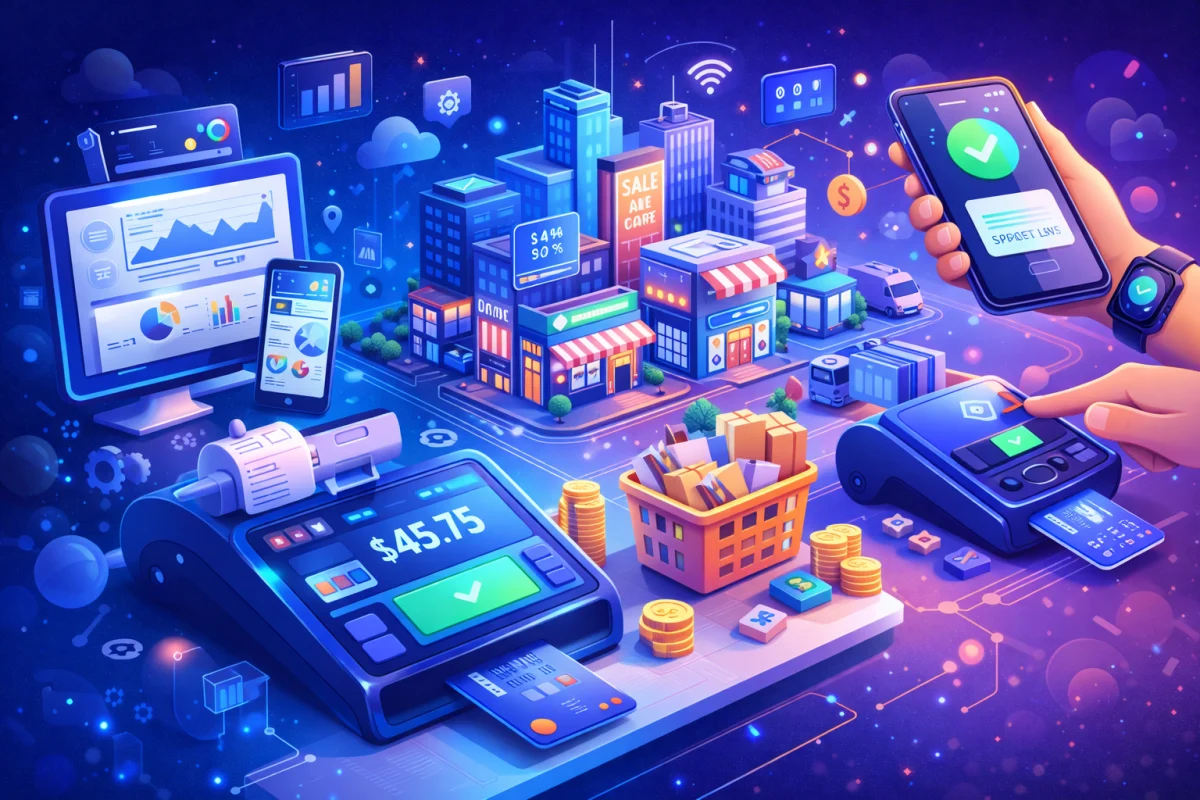
In today’s fast-moving and customer-centric economy, the Point of Sale (POS) system is no longer just a billing tool—it is a critical intelligence hub at the heart of modern commerce. Every transaction represents more than revenue; it represents data, behavior, patterns, and opportunity. A modern POS system transforms these transactions into actionable business insights.
Traditionally, POS systems were designed simply to process payments and print receipts. While this function remains fundamental, the scope of POS technology has expanded dramatically. Today’s systems integrate inventory management, customer relationship tracking, analytics dashboards, accounting synchronization, and even AI-driven forecasting. The POS terminal has evolved into a real-time operational control center.
From a technical perspective, modern POS systems operate within cloud-based architectures that synchronize transactional data instantly across branches and platforms. Whether a business operates a single retail outlet or multiple international locations, centralized POS infrastructure ensures consistent reporting and operational transparency. APIs allow seamless integration with ERP systems, e-commerce platforms, CRM tools, and payment gateways, creating a unified commerce ecosystem.
One of the most significant advantages of advanced POS systems is real-time inventory management. Every sale automatically updates stock levels, reducing manual errors and preventing overstocking or stockouts. When combined with predictive analytics, POS data can forecast demand patterns, identify high-performing products, and optimize procurement cycles.
Customer experience is also directly influenced by POS capability. Faster checkout processes, digital payment flexibility, loyalty program integration, and personalized promotions all rely on a robust POS infrastructure. By analyzing purchasing history, businesses can design targeted offers and improve customer retention strategies.
In an era defined by omnichannel commerce, POS systems bridge the gap between physical and digital sales environments. Integration with e-commerce platforms ensures that online and in-store inventory remains synchronized. This cohesion allows businesses to offer services like buy-online-pickup-in-store (BOPIS), unified pricing strategies, and centralized reporting.
Security and compliance further highlight the importance of POS systems. Secure payment processing, encryption standards, and fraud detection mechanisms protect both businesses and customers. As digital transactions increase, robust cybersecurity frameworks within POS architecture become essential.
The strategic value of POS extends beyond operational efficiency—it drives data-driven growth. Business owners and executives can analyze sales trends by time, location, and product category. They can evaluate staff performance, monitor peak sales hours, and adjust marketing strategies accordingly. Instead of relying on assumptions, decisions are guided by measurable insights.
With the integration of Artificial Intelligence, POS systems are becoming even more powerful. AI can detect purchasing trends, recommend dynamic pricing adjustments, identify suspicious transaction behavior, and automate inventory replenishment. The POS system shifts from being reactive to predictive—anticipating business needs before challenges arise.
In the modern retail and service landscape, agility determines competitiveness. A well-designed POS system enables businesses to scale efficiently, adapt quickly to market shifts, and maintain operational clarity. It acts as the commercial nervous system—capturing every transaction and converting it into strategic intelligence.
In a world where every customer interaction matters, the Point of Sale is no longer the end of the sales process. It is the beginning of insight, optimization, and sustainable growth.