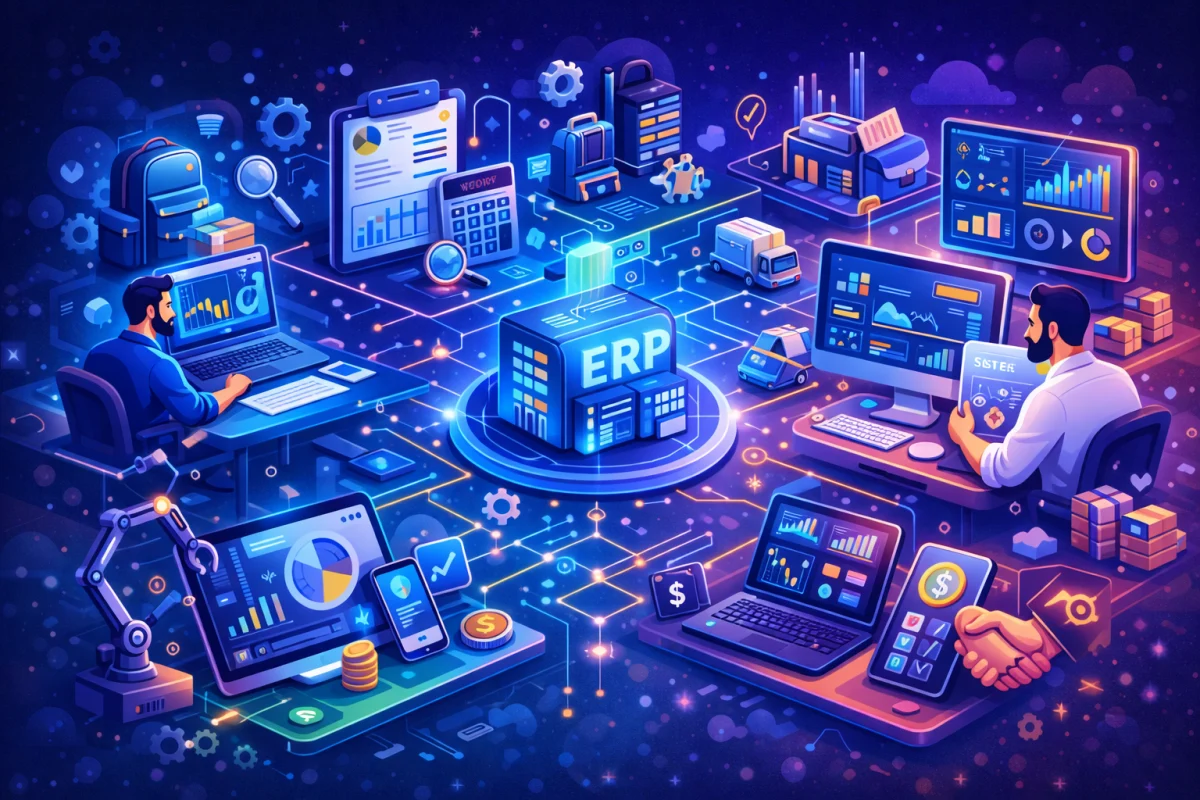
Enterprise Resource Planning (ERP) systems have long served as the structural backbone of organizations. They centralize finance, operations, supply chain, human resources, and inventory into a unified framework. Traditionally, ERP systems were designed to record, organize, and standardize business processes. Today, with the integration of Artificial Intelligence, ERP is evolving from a transactional system into an intelligent decision engine.
The core strength of ERP lies in its centralized data architecture. Every operational event—purchase orders, sales transactions, payroll processing, inventory updates—flows into a structured database. This data richness creates the ideal foundation for AI integration. When machine learning models are layered on top of ERP data pipelines, the system gains predictive and adaptive capabilities.
AI-powered ERP systems move beyond reporting historical metrics. They analyze patterns, forecast trends, and recommend actions in real time. For example, machine learning algorithms can predict inventory shortages by analyzing seasonal demand, supplier performance, and historical sales velocity. Financial AI models can forecast cash flow, detect anomalies in transactions, and flag potential fraud before it escalates. Human resource modules can use predictive analytics to anticipate employee turnover or optimize workforce allocation.
From an architectural perspective, integrating AI into ERP requires a modular and scalable design. Data extraction layers feed structured and unstructured data into analytics engines. Model training pipelines process historical data to generate predictive insights. APIs and orchestration layers allow AI modules to interact dynamically with ERP components such as procurement, accounting, or logistics. In advanced implementations, AI agents can autonomously trigger workflows—automating reorder processes, adjusting budgets, or reallocating resources.
Natural Language Processing (NLP) further enhances ERP usability. Conversational interfaces allow executives and managers to query systems in plain language: “What is the projected revenue next quarter?” or “Which supplier has the highest delay risk?” The ERP system, powered by AI, interprets the query, retrieves relevant data, and delivers contextualized insights.
The strategic value of AI-integrated ERP lies in proactive decision-making. Instead of reacting to problems after they occur, organizations can anticipate disruptions and optimize operations continuously. Supply chain risks can be identified early. Production schedules can adapt dynamically. Pricing strategies can respond to real-time market conditions.
However, integrating AI into ERP also introduces engineering challenges. Data quality becomes critical, as inaccurate data can compromise model reliability. Governance frameworks must ensure transparency and explainability of AI-driven decisions, especially in finance and compliance-sensitive environments. Security measures must protect sensitive enterprise data while enabling scalable processing.
Despite these challenges, the trajectory is clear. ERP systems are transitioning from structured management platforms to intelligent operational ecosystems. AI integration empowers organizations with agility, resilience, and competitive advantage in increasingly complex markets.
In the modern enterprise, data alone is not enough. Intelligence applied to that data defines success. By embedding AI into ERP systems, businesses move from managing resources to optimizing them—transforming operational infrastructure into a continuously learning, self-improving engine of growth.
The future of ERP is not just integrated. It is intelligent.